Related Posts Plugin for WordPress, Blogger...
Showing posts with label Malaysia. Show all posts

Sibu Island

http://www.tiomansafari.com/pic/sibu_island.jpg

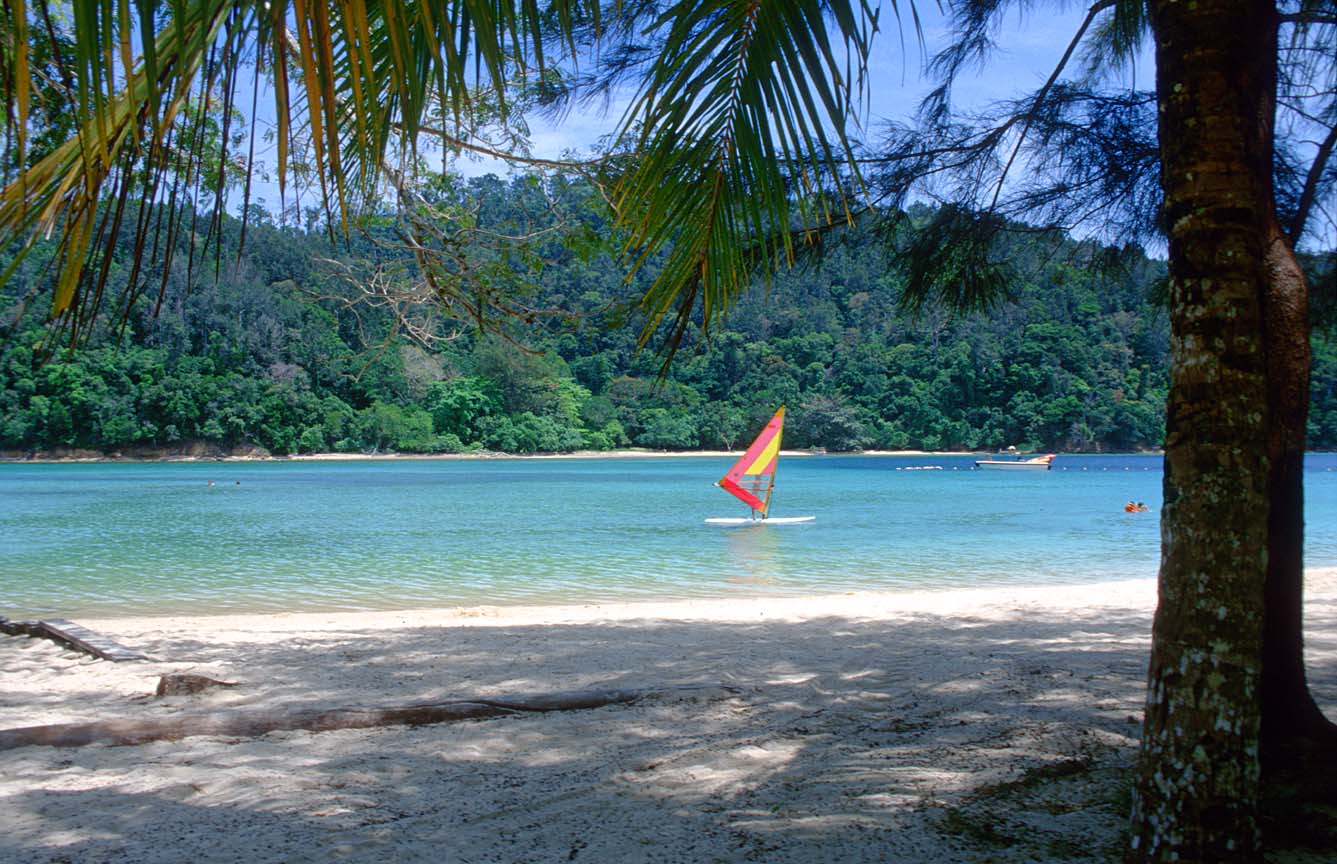
Located 12km from mainland Johor, Pulau Sibu is one of the more developed islands off the East Coast of Johor. From an aerial view, the island looks like a bird or a bat resting with its wings outstretched. Its many fine white, sandy beaches lay glittering against the backdrop of its surrounding emerald green waters, refining its coastal shores.

Its calm and quiet ambience proves to be the perfect choice for those who dream of a relaxing, laid back vacation. The coral reef encircling the island is home to many colourful and exotic fish and other marine life and is a sure heaven for scuba divers and snorkelling enthusiasts, while its lush tropical forest provides soothing greenery to help ease the mind.

The sea off the coast of this island is planted with kelong or artificial tyre-reefs and has been a great pull for anglers. However, since the island was gazetted as a marine park, fishing activities here are limited to rod and line fishing only.

[+/-] Read more...

Tinggi Island

Pulau Tinggi or Tinggi Island is one of the many captivating tropical islands that nestles the East Coast of Johor. Its white, sandy beach surrounded by alluring blue waters makes it a perfect haven for those who want to escape from the mundane world.

Pulau Tinggi gets its name from a high hill rising 2,000 feet above sea level ("tinggi" is a Malay word for high). The island is painted green by the lush tropical forest that is rich with rattan, timber and other valuable plants.

Its surrounding waters is rich with exotic marine life and beautiful underwater flora fringing its coral reefs, providing a breathtaking underwater view for divers and snorkelling enthusiasts. The island is also blessed with natural fresh water and sheltered harbour, which explains its role as a stopover point for traders in the olden days.

Apart from its physical beauty, Pulau Tinggi is also famous for its mystical characters. The locals believe that Malay's most famous hero, Hang Tuah, had stopped here in one of his journeys. It is believed that his spirit still guards the island till these days.

[+/-] Read more...

Aur Island

The image “http://www.myoutdoor.com/aur/main_page.jpg” cannot be displayed, because it contains errors.

Pulau Aur (Aur Island) is located 65km east of Mersing on the east coast of Johor. This island and its surrounding islands -- Pulau Dayang (Dayang Island), Pulau Lang (Lang Island) and Pulau Pinang (Pinang Island) are rated by divers as one of the best scuba diving destinations within the Johor Marine Park area.

The waters here are deeper than around the inner islands. Due to its remoteness from the mainland, visibility is excellent and sightings of pelagics are common. However, cost of boat rentals are high and scuba diving has been possible only in groups pre-arranged by dive shops in Kuala Lumpur and Singapore.

The Aur group of islands has been designated as a Marine Park. Therefore, visitors are subject to conditions and regulations.

[+/-] Read more...

Kapas Island

http://www.cuti.com.my/Sub/Terengganu/pkapas1.jpg

Pulau Kapas (Kapas Island) and its neighbouring island Pulau Gemia are two popular day excursion and overnight destinations for locals and foreign tourists seeking a quick gateway to a relaxing lifestyle on the white sandy beaches.

The reefs surrounding Pulau Kapas ranges in depth from three to 20 metres. It has good marine life and coral despite being located so close to the mainland (only six km from the coastal village of Marang). Varieties of fish that can be seen here include Moorish idols, Wrasses, and Butterfly fishes.

The best time to go diving is between the months of May and October as the visibility is excellent. However, it is best not to visit the island between the months of November and February as it is affected by the northeast monsoon. There can be days when the rain is heavier than usual and the waves can get quite big.

During the months of April to August, green and hawksbill turtles come onshore to lay eggs. Pulau Kapas has also become a popular place for squid fishing especially in the month of June.

Visitors to the island can choose from a variety of accommodations ranging from the up-market Gem Isles Resort to basic A-frames. It can get crowded during weekends and public holidays.

[+/-] Read more...

Tiga Park Island

http://www.cuti.com.my/Sub/Sabah/tigapark2.jpg

As the name implies, Pulau Tiga Park consists of three main islands – Pulau Tiga, Pulau Kalampunian Besar and Pulau Kalampunian Damit or better known as ‘Snake Island’. Covering a total area of 15,864ha., this park was gazetted in 1978 to protect its pristine natural environment, which include coral reefs, exotic marine life, native flora and fauna and other natural existence of the islands.

The only available facilities in the park are located at Pulau Tiga, the largest of the three islands. Dubbed as ‘Survivor Island’, Pulau Tiga was the main location of the popular ‘Survivor’ TV programme shot in 1999.

Also known as Snake Island, Pulau Kalampunian Damit is a small island covered in thick vegetation and is home to hundreds of the amphibious sea snakes (the Laticuda colubrine), which lays eggs on the shore of this island.

Pulau Kalampunian Besar is a small sand cay built up from unconsolidated coral fragments popular with the many species of birds including the Megapodes, the Great Crested Terns, pigeons and sea eagles.

The drier month of March to July is the best time to visit the park, although it is open throughout the year. Pulau Tiga Park is located in Kimanis Bay on the West Coast of Sabah, about 48km south of Kota Kinabalu.

There are over 130 species of fishes identified in this marine park. Best time to dive is from March to October. Average diving depth here is 10m, maximum depth is 25m. The island's dive experience boasts of regular sightings of lobsters, stingrays and various species of soft whip corals.

Pulau Tiga is the largest of the three islands that make up Pulau Tiga Park. Its beautiful landscape and pristine natural environment has attracted CBS TV Network of the USA to use this island as the main location of the popular ‘Survivor’ Programme, dubbing it the ‘Survivor Island’. This island was formed through the eruption of several mud volcanoes. The last explosion happened in 1941 and since then the volcanoes have remained relatively passive although several small mud volcanoes spewing cool, mineral rich mud can still be found near the summit of the island. The notion that this mineral rich mud is good for your skin makes mud bathing a must-do activity in this island. The island’s lush green forest serves as a soothing backdrop while the fine sand of its white beaches and the clear unpolluted water is a wonder for nature lovers. The coral reefs encircling the island invite many species of fish and other marine life to make it their home. Among the activities that can be done here include diving, non-motorised water sports, trekking, bird watching and mud bathing. The Park Headquarters is situated on the southern side of the island, not far from Pulau Tiga Resort, the only resort facility available on the island.

Pulau Kalampunian Damit, or better known as Snake Island, is one of the three islands that make up Pulau Tiga Park. This small island is composed of sandstone, limestone and shale, and is covered in thick vegetation.

As an island it is unique, for it is a breeding site for the amphibious sea snake (sea kraits) that can be easily found resting under rocks, in cracks or on trees all over the island. They usually rest during the day and swim back into the ocean at night. Although their venom is deadly, they have a relatively small mouth and are actually very timid.

They can be dangerous only when mishandled or stepped on. The island was featured twice: first in a 1992 Oxford Film documentary film titled Eagle and the Snake and again in CBS' Survivor series shot in 1999. Its surrounding natural environment and native inhabitants are protected by the Government of Malaysia, and a special permit is required to visit it.


[+/-] Read more...

Lankayan Island

http://www.asiadivesite.com/images/malaysia/lankayan.jpg

Lankayan Island is a virtually uninhabited island located in the Sulu Sea, just off the northeastern coast of Sandakan, Sabah. This tiny island is covered by thick tropical jungle surrounded by smooth, white sand, -- the perfect getaway.

It has the only dive resort in Malaysia's Sulu Sea called the Lankayan Island Dive Resort and is one of the best spots for whale shark sighting. The location of the whale shark is usually indicated by flocks of seabirds screeching high above the placid surface. With luck, divers and snorkellers may get close to this gentle giant, although it may decide to swim away after a few minutes.

During the day you can witness black-tip sharks swimming about by the beach. At night, hawksbill and green turtles may be spotted coming to shore.

Lankayan Island is indeed a true macroworld paradise. Large stretches of beautiful hard and soft corals belonging to numerous genera are preserved, including colourful juvenile fishes. It is possible that some of the species found here are as yet unidentified.

Pelagics also abound here, from large schools of scads to yellowtail barracudas and jacks. The many schools of medium to large humphead parrotfish are always exciting to encounter. Sometimes, the diver is lucky enough to meet large rays, guitarfish and even manatees.

For those more inclined towards the smaller denizens of the reefs, there are numerous ‘juvenile’ fishes, clown anemone fishes, decorator and spider crabs, coral shrimps, nudibranchs and prawn gobies.

Among the 40 dive sites is ‘Lankayan Wreck’, the remains of an ocean-going boat that was used in illegal fishing here. This wreck now hosts many different species of fish from small glassfish, harlequin ghost pipefish, painted frogfish to giant grouper and marbled stingrays.
Despite the remoteness, the island has all the amenities of a tropical resort. Visitors stay in bungalows, made out of local wooden materials to blend into the natural surroundings. Indeed, Lankayan is not only for discerning divers but for anyone who appreciates the tranquility of a paradise island that offers beautiful sunrise, spectacular sunsets and magnificent seascapes.

[+/-] Read more...

Mantanani Island

[mantanani.JPG]

Mantanani Island is a group of three isolated islands northwest of Kota Belud, a one-hour drive from Kota Kinabalu. Until recently, the islands were only known to a few locals. The largest island houses the only dive resort, Mantanani Resort which is situated at the western end on the edge of a white sandy bay.

Nestled amongst the tall coconut palms are beach cabins scattered around the main plantation styled house. Three wrecks have been discovered which still hold plenty of secrets and are now home to a menagerie of marine creatures such as Lionfish, Scorpionfish, octopus, glassfish and the coral reefs surrounding the islands have plenty to offer, for both novice and experienced diver.

Many species of rays can be found, Marbled stingray, Blue spotted ray and large schools of eagle rays. For macro photographers the “muck diving” is amazing, seahorses, imperial shrimps, pink-eye gobies, jawfish, blue-ringed octopus, ribbon eels and many nudibranch you want to be able to find in books! There are now 16 dive sites identified by Mantanani Resort with many more still to be explored. The Bajaus who live on Mantanani believes that the wreck site, which they refer to as batu air (water rock) is haunted, but yields a good source for their fishing and as such, treats the site with great respect. .

Best time to go is from April to December. Don't go from December through April. Visibility can be as high as 40m.

[+/-] Read more...

Lang Tengah Island


Lang Tengah Island (Pulau  Lang Tengah)

Sandwiched between Redang and Perhentian, the cosy Lang Tengah Island is a good choice for a quieter dive holiday. Most of the resorts on Lang Tengah have in-house dive centres, making it a popular choice among divers. Its close proximity to the fabulous dive sites of Redang and Perhentian islands also give divers convenient access to some of the best dive sites in the east coast. There are 15 dive sites around the island which average about 22m in depth. One site you must not miss is Yellow Reef, which descends 25m down, punctuated by crevices where nurse sharks sometimes hide. Those lucky enough can spot guitar sharks – one of the main attractions here – around July.

Lang Tengah Island lies in the middle of Malaysia's foremost Marine Park sanctuary where living corals and endangered species of marine life are protected. Situated between Redang in the south and Perhentian in the north, Lang Tengah's coast is nature's well-kept secret. Crystal-clear water, pristine beaches and untouched tropical jungle. It's arresting beauty lingers forever in your memory. An island you can call your own.. private and tranquil. Best time to be here is between March to October.

Take a stroll along the whitewashed, sandy beaches or bath in the sun for that coveted golden tan. Explore the wonders of nature, and you'll be surprised of what you'll discover. Whatever you do, a stay at Lang Tengah will truly be an enjoyable one!

The shallow house reef in front of Square Point Resort was covered mainly with staghorn coral, and provides opportunities to spot adult blacktip reef sharks which frequent the shallow areas of the reef. There is a clear reef edge marked by surface buoys, where the bottom sloped away quickly into deeper blue waters.

Pulau Lang Tengah (Lang Tengah Island) is one of the best diving spot in Malaysia. Divers can choose from over 15 dive sites around Land Tengah Island all within 10 minutes boat ride from each other. These include Karang Nibong Laut's mounds made of rocks where bamboo sharks lie in rest, and Terumbu Kuning (25m) which is made of a formation of rocks, where you can find nurse sharks, and a host of other marine life including gobies and nudibranch.

[+/-] Read more...

Tunku Abdul Rahman Park Islands

Tunku Abdul Rahman

This unique park comprising five idyllic islands is only 20 minutes away from Kota Kinabalu by speedboat. It is home to a variey of flora and fauna, including one of the most intriguing birds, the Megapode or Burung Tambun, a chicken lookalike with large feet and meows like a cat. With stretches of white sandy beaches, crystal clear waters and diverse coral reefs, this is an ideal spotfor beginner divers as well as snorkelling and picnicking.

At 20 hectares, Manukan Island is the second largest island in the group with a beautiful beach. The surrounding waters are crystal clear, perfect for diving , snorkelling and swimming.

Mamutik Island is the smallest island, covering only 6 hectares, but is especially blessed with rich coral and marine life such as the rare white distichopora and reddendrophyllia which can be found at the north-eastern tip.

Sulug Island at 8 hectares is the least developed, with an untouched quality that makes it attractive to those seeking a more tranquil atmosphere. The shoreline is rocky with beautiful patches of coral at the southern end.

Sapi Island is a small island with the distinction of having beautiful white beaches and teeming coral reefs for swimming, diving and snorkelling. Hiking trails through the interior provide an excellent opportunity to appreciate nature in its wild habitat.

Gaya Island is the largest island at 140 hectares with 25km of shoreline. Popular beaches include Bulijong Bay and Police Beach with a quarter mile of beautiful sand sloping gently into the crystal clear bay. The untouched coastal dipterocarp forest is ideal for trekking and studying unique species of plant and animal life.

Tunku Abdul Rahman National Park - Sapi Island beach

[+/-] Read more...

Tenggol Island

The Tenggol group of islands is the most southerly of Terengganu's Marine Parks. It consists of Pulau Tenggol, Pulau Nyireh (Nyireh Island), Tokong Timur, Tokong Talang, Tokong Burung and Tokong Kemudi.

The main island, Pulau Tenggol, is about 50 hectares in size and is one of the most beautiful and serene islands off Peninsular Malaysia's east coast. It is also famous for its spectacular rocky cliffs that offer many excellent dive sites. Here, one can find pristine coral formations and a number of submerged rocks with excellent coral growths. The deep waters surrounding the island offer good visibility especially during the months of April until June.

Marine life that can be seen here includes sharks, rays, nudibranch and a wide variety of hard and soft coral. Before being declared a marine park, Pulau Tenggol was a favourite hunting ground for spear-fishermen, particularly for snappers and groupers.

[+/-] Read more...

Tioman Island

Lying some 56km off the coast of Mersing, Tioman is an instantly recognisable name, an island that is internationally acclaimed as one of the ten most beautiful islands in the world and made famous by the 1958 Hollywood classic, ‘South Pacific’.

Tioman Island is the largest island off the east coast of Peninsular Malaysia and the most developed of the volcanic islands that make up Pahang’s Marine Park, complete with its own airstrip. Tioman island is about 38km in length and 19km at its widest point. With Gunung Nenek Semukut (Dragonhorn Mountain), standing at 690m or twice the height of the Eiffel Tower, being the highest peak on the island. Tioman is also one of the most developed islands off the east coast, with a wide range of accommodation choice, from five-star resorts to simple comfortable wooden chalets.

Tioman’s underwater world is equally seductive. Tioman averages at about 10m, this can increase on occasions up to 30m. Just 13km north-west of Tioman, just off Salang Village, a cluster of five smaller islands - Sepoi, Labas, Soyah, Chebeh, Tulai and Burong - harbour an array of dive sites. Protected from the open sea to the east, these islands offer the perfect conditions for a thriving underwater metropolis. The other islands are Renggis, Sembilang and Seri Buat.

Most resorts are closed from November until February due to the Northeast monsoon, which brings strong winds and rough seas. However, Tioman remains open during this period. But the best time to visit Tioman island is between February and October. The average temperature on Tioman is between 28 to 30 degrees Celcius.

[+/-] Read more...

Perhentian Island


Perhentian IslandThe Pulau Perhentian (Perhentian Island) group of islands are the northernmost islands off the east coast of Peninsular Malaysia. There are two main islands -- Pulau Perhentian Besar (Perhentian Besar Island) and Pulau Perhentian Kecil (Perhentian Kecil Island) -- plus several large rocky outcrops to the northeast namely Pulau Tokong Kemudi Barat (Tokong Kemudi Barat Island), Pulau Dara Kecil (Dara Kecil Island), Pulau Tokong Kemudi (Tokong Kemudi Island), Pulau Rawa (Rawa Island), Pulau Burung (Burong Island) and Pulau Serenggeh (Serenggeh Island).

Typical of most tropical islands, the two main islands are heavily forested and ringed with white sandy beaches. Being far away from the mainland, Pulau Perhentian, which literally means 'Stopover Island', is rich in coral and marine life which includes stingrays, nudibranchs, black corals, moray eels and colourful fishes. Turtles come up to lay eggs between April and September.

The main village is situated on the southeast coast of Pulau Perhentian Kecil and the locals are a friendly and hospitable lot. Accommodation is mainly aimed at budget travellers and is available on both the main islands as well as some of the smaller islands. New resorts with better facilities are currently being constructed.

Perhentian is one of the best diving spots in Malaysia, and is also excellent for snorkelling and jungle trekking. Its laid-back atmosphere makes it the perfect getaway.

[+/-] Read more...

Redang Island

From a sleepy fishing village, Pulau Redang (Redang Island) has grown into one of the most popular tourist destinations on the east coast of Peninsular Malaysia. The reefs of the Redang archipelago are home to over 55 genera of corals and 100 species of fish. Every year, Pulau Redang attracts thousands of visitors who come to enjoy the sun, beaches and spectacular marine life.

The Redang archipelago, located off the coast of Terengganu state, comprises Pulau Redang (Redang Island), Pulau Pinang (Pinang Island), Pulau Ling (Ling Island), Pulau Ekor Tebu (Ekor Tebu Island), Pulau Kerengga Besar (Kerengga Besar Island), Pulau Kerengga Kecil (Kerengga Kecil Island), Pulau Paku Besar (Paku Besar Island), Pulau Paku Kecil (Paku Kecil Island) and Pulau Lima (Lima Island). This group of islands boasts white sandy beaches, spectacular coral reefs and crystal clear waters, making it one of the best dive spots in the world.
The waters surrounding the Redang group of islands have been the second area to be gazetted as a Marine Park following Pulau Payar in Kedah. The park headquarters is located on Pulau Pinang which is off the main jetty of Pulau Redang.

[+/-] Read more...

Payar Island

Payar Island, which comprises of four uninhabited islands - Payar, Lembu, Kaca and Segantang - makes up Malaysia's oldest Marine Park sanctuary.

These islands, famous for the varied and colourful marine life that they support, offer the best diving sites on Peninsular Malaysia's west coast. Access is not a problem as speedboats and catamarans ply the route on a regular basis from Langkawi and Penang.

At Payar Island, the largest of the four islands, you will find the Marine Park Centre which was set up and operated by the Fisheries Department. Here, you'll find useful information on the do's and don'ts while visiting this marine park.

If you are not into water activities, do check out the two hiking trails that have been constructed to enable visitors to explore and enjoy breathtaking views of the surrounding sea and beyond. Gazebos, picnic tables, BBQ pits and restroom facilities are also available for public use. Although picnics and camping are allowed, cutting of trees and open burning are strictly prohibited.

Nearby is a jetty, and just a short distance away is a pontoon with facilities for easy access to the reef below.The waters of Pulau Payar have an additional attraction -- artificial reefs built from tyres, concrete blocks and old boats, which over the years have developed into mature reefs that are teeming with marine life.

[+/-] Read more...

Sipadan Island 2


The late Jacques Costeau, the world-renowned oceanographer, described Pulau Sipadan (Sipadan Island) as ‘an untouched piece of art’, while divers around the world voted it as the best diving spot in the world.

This Malaysia’s only oceanic island is very small – only 12 hectares in size. A 25-minute walk is all that is required to circle the island on foot. Surrounded by crystal clear waters, this crown jewel is a treasure trove of some of the most amazing marine animals.

Declared a bird sanctuary in 1933 by the Colonial Government of North Borneo and re-gazetted in 1963 by the Malaysian Government, the dense vegetation on Pulau Sipadan supports a large variety of tropical birds which include sea eagles, kingfishes, sunbirds, starlings and wood pigeons. Exotic crustaceans including the amazing coconut crab (Birgus largo) roam the beaches and scurry among the undergrowth.

Pulau Sipadan offers some of the best wall diving in the world. The water's edge presents a drop of more than 609.6m (2,000ft) just 9.14m (30ft) from the beach, and all dive sites are within easy reach by boat. Thousands of marine life, be it big or small, make Pulau Sipadan their home, making it one of the most exciting dive locations in the world.


[+/-] Read more...

Sipadan Island

The internationally famous island of Sipadan lies five degrees north of the equator in the Sulawesi Sea (Celebes Sea). Lying 35km south of Semporna, on Sabah's mainland, like many tropical islands it is thickly forested and surrounded by sandy beaches. Sipadan is an oceanic island and was formed by living corals growing on top of an extinct undersea volcano, which rises 600m from the seabed.

The geographic position of Sipadan puts it in the centre of the richest marine habitat in the world, the heart of the Indo-Pacific basin. More than 3000 species of fish and hundreds of coral species have been classified in this richest of ecosystems. Sipadan is well known for its unusually large numbers of green and hawksbill turtles which gather there to mate and nest and it is not unusual for a diver to see more then 70 turtles on each dive. Another unique feature to divers visiting Sipadan is the turtle tomb, an underwater limestone cave with a labyrinth of tunnels and chambers that contain many skeletal remains of tribes that became disoriented and then drowned.

The residential schooling barracuda and big- eye trevally are one of the highlights on every divers wish-list which often gather in thousands forming spectacular tornado-like formations. With the possibility of seeing pelagics such as mantas, eagle rays, scalloped hammerhead sharks and whale sharks, each dive at Sipadan is a highly anticipated event. Its not only the frogfish that amaze divers coming to Sipadan, the macro life is equally mesmerizing. Garden eels, leaf scorpionfish. mantis shrimps, fire graces and various pipefish are guaranteed at various dive sites. The diversity and abundance of marine life found at Sipadan gives it its reputation of being one of the ten best dive locations in the world.

Announcement: Presently, the island is in the care of Wildlife Department, which has stationed several park rangers to oversee the state of nature of the island. To protect the world unique flora & fauna on the island as well as the underwater world the Malaysian Government has decided that from 2005 no more overnight facilities shall be on Sipadan itself. This means that all dive operators on Sipadan have to move; diving Sipadan will be conducted from other destinations, such as Mabul and Kapalai. It is likely that Sipadan will be designated a marine reserve under Sabah Parks, and there are plans for a World Heritage Site listing.

Picture Source - Book of "Top Nature & Dive Resorts of Borneo" by Andrea and Anthonella Ferrari available for sale on TravelMart.

Destination: Sipadan
Accommodation: No
Transport: Coach & 4WD, boat
Tour Operators: Yes
Guided Tour: Day diving only
Best Time to Visit: All year round
Length of Visit: Day dives
Restaurants: No
Ratings: Vote
Clothing: Out Door Gear
Tour Type: Nature & Wildlife
Other Areas to Visit: Tawau Hills Park
Madai Caves
Kapalai Island
Mabul Island
Photo Credits: STB

Pulau Sipadan Resort

[+/-] Read more...

Beauty Island for holiday, wedding, couple, vacation destination © 2008 | Nanang | Island for Holiday.

TOP